Discover Fucoidan for your skin. Now only €2 shipping cost for NL/BEL/GER.
The Ocean’s Pharmacy: Why Seaweed Is the Ultimate Skincare Lab
When most people think of seaweed, they think of the slimy green stuff wrapping around their ankles at the beach. At Salassia, we see something else. We see an evolutionary miracle.
12/15/20252 min read
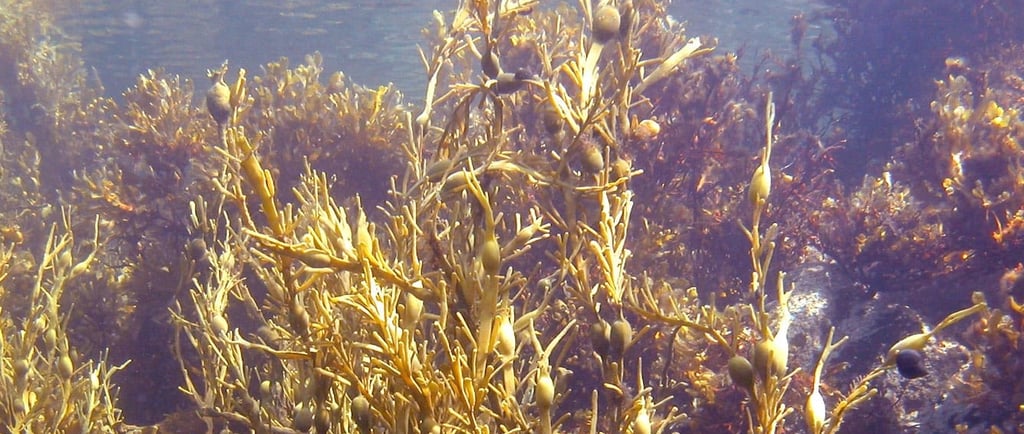
When most people think of seaweed, they think of the slimy green stuff wrapping around their ankles at the beach.
At Salassia, we see something else. We see an evolutionary miracle.
Seaweed isn't just a plant; it is a survivor. It thrives in an environment that would kill a land plant in minutes. It endures constantly changing salinity, crushing deep-sea pressure, and at low tide, it sits exposed to direct, scorching UV radiation without burning or drying out.
How? By developing complex biological shields—unique gels, antioxidants, and amino acids—that allow it to regenerate endlessly. When we apply seaweed to our skin, we aren't just moisturizing; we are borrowing that survival code.
Here is your guide to the three "Colors of the Deep" and why your skin recognizes them better than almost anything else.
The 3 Colors of Algae (And What They Do for You)
Seaweed is categorized by color, and each color has a different superpower.
1. The Protector: Brown Algae (Phaeophyta)
The Star: Undaria pinnatifida (Wakame) and Kelp.
The Power: This is where we find Fucoidan, the "slime" that protects the plant from physical damage and bacteria.
For Your Skin: It is the king of immunity and hydration. Brown algae extracts are clinically proven to inhibit the enzymes that break down collagen, while soothing inflammation. It’s the heavy lifter in the Salassia formula.
2. The Shield: Red Algae (Rhodophyta)
The Star: Porphyra umbilicalis (Nori) and Irish Moss.
The Power: These algae often grow in shallow waters or on rocks exposed to the sun. To survive, they produce MAAs (Mycosporine-like Amino Acids), which act as natural UV absorbers.
For Your Skin: Think of it as a photo-defense booster. We use Red Algae to help shield your skin cells from the aging effects of UVA radiation.
3. The Energizer: Green Algae (Chlorophyta)
The Star: Ulva lactuca (Sea Lettuce).
The Power: Packed with chlorophyll, vitamins, and magnesium.
For Your Skin: These are often used for detoxification and mineral replenishment. They help "wake up" tired, dull skin.
Why Your Skin "Drinks" Seaweed
Have you ever applied a lotion that just sits on top of your face? That is often because of a lack of biocompatibility.
Seaweed is different. The mineral composition of seawater is strikingly similar to human blood plasma. Because seaweed absorbs these minerals directly from the ocean, it becomes a dense, bio-available cocktail of zinc, magnesium, and calcium that your skin actually recognizes.
It’s not foreign matter; it’s family.
3 Things You Didn't Know About Algae
It’s the Lungs of the Earth: Forget the rainforest—marine algae produce between 50% and 80% of the oxygen on Earth. Every second breath you take comes from the ocean.
It Grows Fast: Giant Kelp is one of the fastest-growing organisms on the planet, capable of growing up to 60cm (2 feet) per day. That is the kind of regenerative energy we want in our skincare.
It’s Ancient Tech: The oldest algae fossils are over 1.6 billion years old. They have survived ice ages, meteors, and extinction events. If you want to learn about anti-aging, ask the organism that has survived everything.
The Salassia Difference
We don't just throw seaweed into a blender. We use Biotech Sourcing to extract the specific DNA-protecting and immune-boosting molecules (Fucoidan and MAAs) from the hardiest Brown and Red algae species.
It’s the wisdom of the ocean, refined for the modern face.
SALASSIA
Natural skincare. Powered by seaweed. Rooted in science.
Contact us
Be the first to receive updates!
Salassia
Lange Haven 132
3111CK Schiedam
The Netherlands
© 2026 Salassia. All rights reserved.